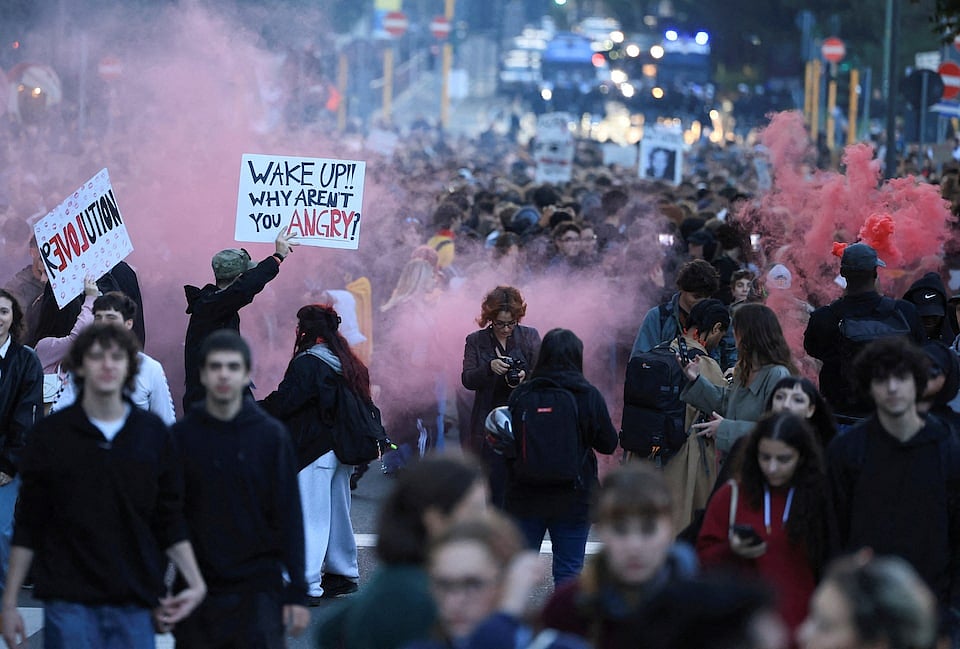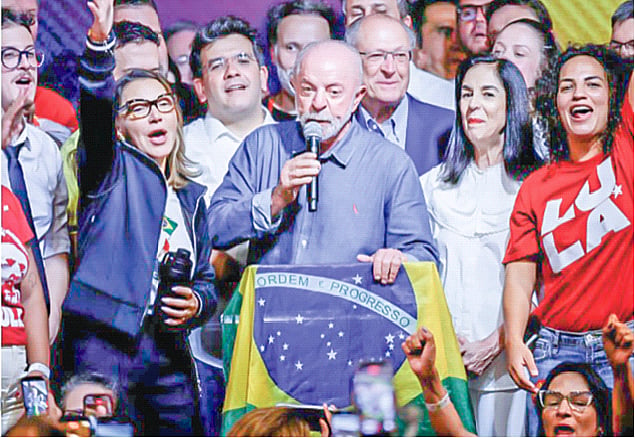
The widespread and persistent protests sweeping across various European nations over the past few months cannot simply be dismissed as spontaneous youth rebellions. Demonstrations originating in France have rapidly cascaded into Belgium, Italy, Germany, Greece, Spain, and Ireland, reflecting deep-seated public anger against prevailing economic policies and wealth inequality. Amidst this backdrop of civil unrest, the presidential election victory of left-wing leader Luiz Inácio Lula da Silva in Brazil has injected a profound sense of inspiration and renewed political energy into European activist circles.
While European nations frequently top global happiness and development indices, the ongoing unrest highlights systemic flaws within their socio-economic structures. Citizens, particularly the youth, are protesting against the erosion of traditional social contracts, skyrocketing living costs, and an expanding wealth gap. The widespread demonstrations, occasionally marred by civil disobedience and clashes, underscore a growing disillusionment with mainstream governance and economic neoliberalism.

It is within this volatile context that Lula's triumph in Brazil resonates deeply with the European left. Lula's platform of reducing inequality, championing the working class, and challenging elite-driven economic paradigms mirrors the core grievances of the European protesters. His electoral success serves as tangible proof that a progressive, pro-poor political agenda can defeat entrenched conservative or establishment forces, providing a psychological and ideological boost to movements fighting for systemic change in Europe.
Nevertheless, the political fallout from these protests remains complex. Concerns persist, particularly in France, regarding the potential exploitation of public anger by far-right political factions. When traditional leadership fails to address fundamental economic anxieties, populist and right-wing elements often manipulate the narrative for sectarian gains. However, Lula's victory offers a counter-narrative, proving that inclusive and egalitarian politics can successfully mobilize the populace and offer a viable alternative to status-quo governance.
Looking ahead, the trajectory of these European movements will hinge on how effectively governments respond to the demands for economic justice and equitable resource distribution. Failure to enact meaningful reforms risks deepening social polarization. Meanwhile, the ideological synergy between Latin American progressive movements and European grassroots activism highlights a growing global consciousness among the youth, signaling that the demand for fairness and systemic reform has transcended geographic boundaries.