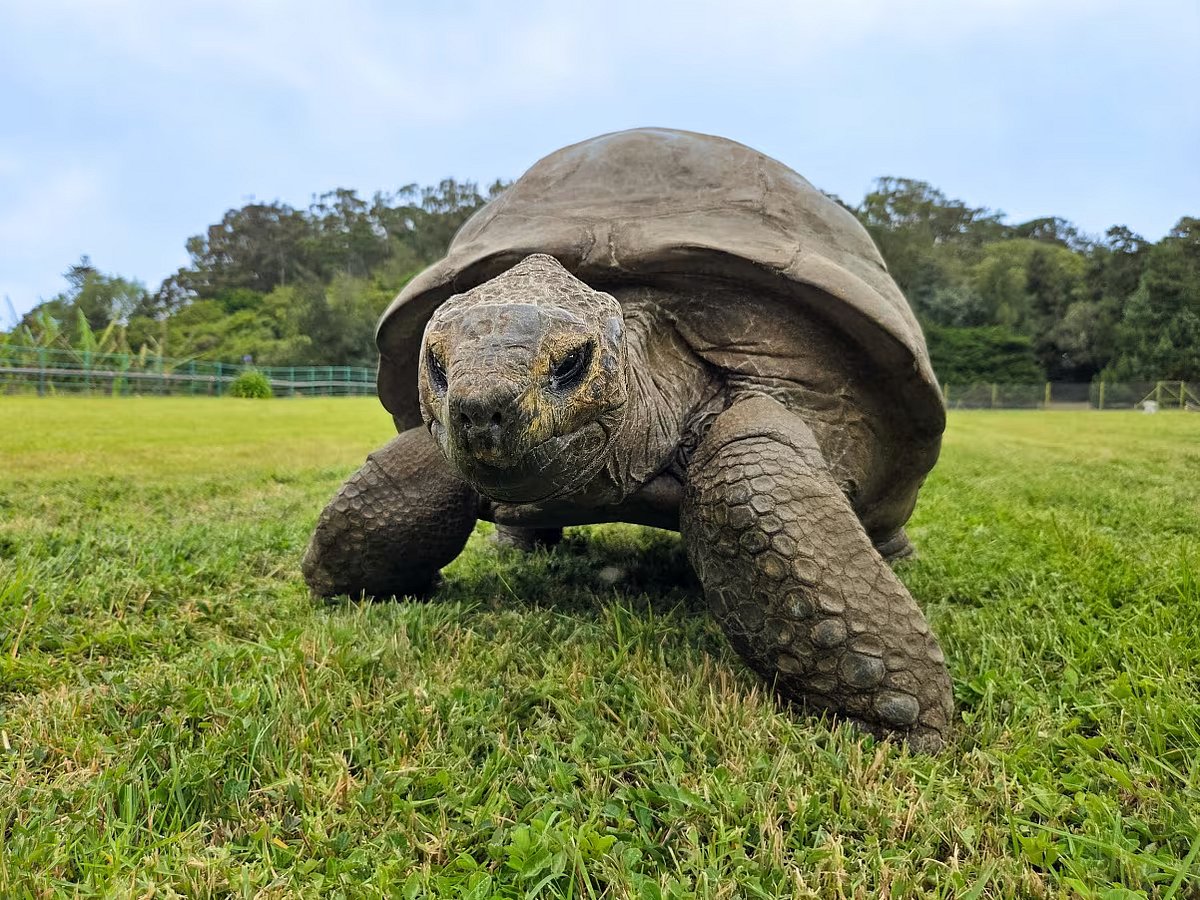
Jonathan, recognized as the world's oldest living land animal, is an estimated 194-year-old giant tortoise belonging to the Seychelles Aldabra species. To uncover the secrets behind his extraordinary lifespan, scientists have analyzed his DNA, discovering specific genes capable of repairing cellular damage and reducing inflammation. These findings could eventually aid medical research aimed at slowing age-related physical decline in humans.
Published in the journal Science Advances, the study involved a comprehensive analysis of Jonathan's genome—his complete DNA—as well as his epigenome. The epigenome consists of regulatory systems that determine whether genes are switched on or off.

Justin Gerlach, a biologist at the University of Cambridge in the UK and co-author of the study, stated that Jonathan possesses unique genes associated with DNA repair and inflammation reduction. The research identified 287 genetic traits that may play a crucial role in protecting cells from age-related damage.
Scientists believe that one of the primary reasons for the tortoise's long life is its slow metabolic rate. A slower metabolism reduces the speed of chemical reactions within cells, thereby decreasing the likelihood of cellular and DNA damage.
However, researchers note that beyond a slow metabolism, Jonathan's ability to regulate gene activity even in old age is equally significant. According to Gerlach, as humans age, normal cellular functions are disrupted, which can increase the risk of diseases such as cancer. In contrast, Jonathan's body continues to exhibit...