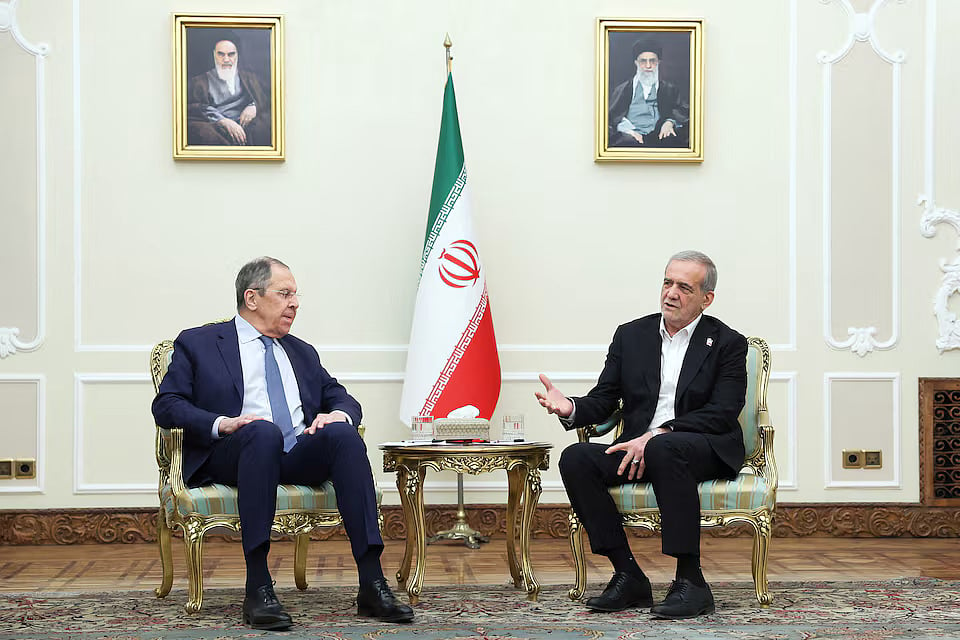
Russian Foreign Minister Sergey Lavrov's recent visit to Tehran, where he held extensive talks with Iranian President Masoud Pezeshkian and other top officials, has brought to the forefront the possibility of Moscow acting as a mediator for nuclear negotiations between Washington and Tehran. This high-level diplomatic engagement follows closely on the heels of two crucial meetings between President Pezeshkian and Russian President Vladimir Putin. While it may be premature to predict the ultimate success of these diplomatic overtures, analysts believe several unique factors could position Russia as a robust and effective mediator compared to other global powers.
As a premier nuclear superpower and the home of 'Rosatom', the global leader in civilian nuclear energy, Russia possesses deep technical expertise and comprehensive insight into every aspect of Iran's nuclear program. Moscow's stance on this sensitive issue has consistently remained pragmatic and clearly defined. On one hand, Russia strongly supports Iran's legitimate aspirations for domestic civilian nuclear power generation, which is tangibly demonstrated by its ongoing construction of two new units at the Bushehr nuclear power plant. On the other hand, Moscow remains strictly opposed to Iran developing or acquiring nuclear weapons, wishing to prevent any nuclear proliferation in such close proximity to its own borders.

Furthermore, the historical hesitations and lingering mistrust between Moscow and Tehran have significantly diminished in recent times, paving the way for a remarkably improved bilateral relationship. This growing trust is largely anchored in the shared geopolitical reality that both nations face intense pressure from Western sanctions, driving them toward closer economic and diplomatic alignment. Past diplomatic attempts to resolve the US-Iran nuclear impasse have repeatedly faltered due to deep-seated hostilities, inflexible preconditions from Washington, and Tehran's steadfast defense of its sovereign rights. Bridging this wide diplomatic chasm remains an arduous challenge.
Despite these hurdles, Russia's unique positioning allows it to maintain open channels with both the Iranian leadership and international stakeholders. If Moscow successfully leverages its strategic partnership with Tehran and its diplomatic weight with global powers, it could potentially chart a viable path back to the negotiating table. However, the success of this potential mediation will largely depend on the evolving geopolitical dynamics in the Middle East, the shifting priorities of Western administrations, and the complex calculus of regional security. As the international community closely monitors these developments, Russia's diplomatic intervention could either herald a breakthrough in the prolonged standoff or highlight the enduring complexities of modern nuclear diplomacy.