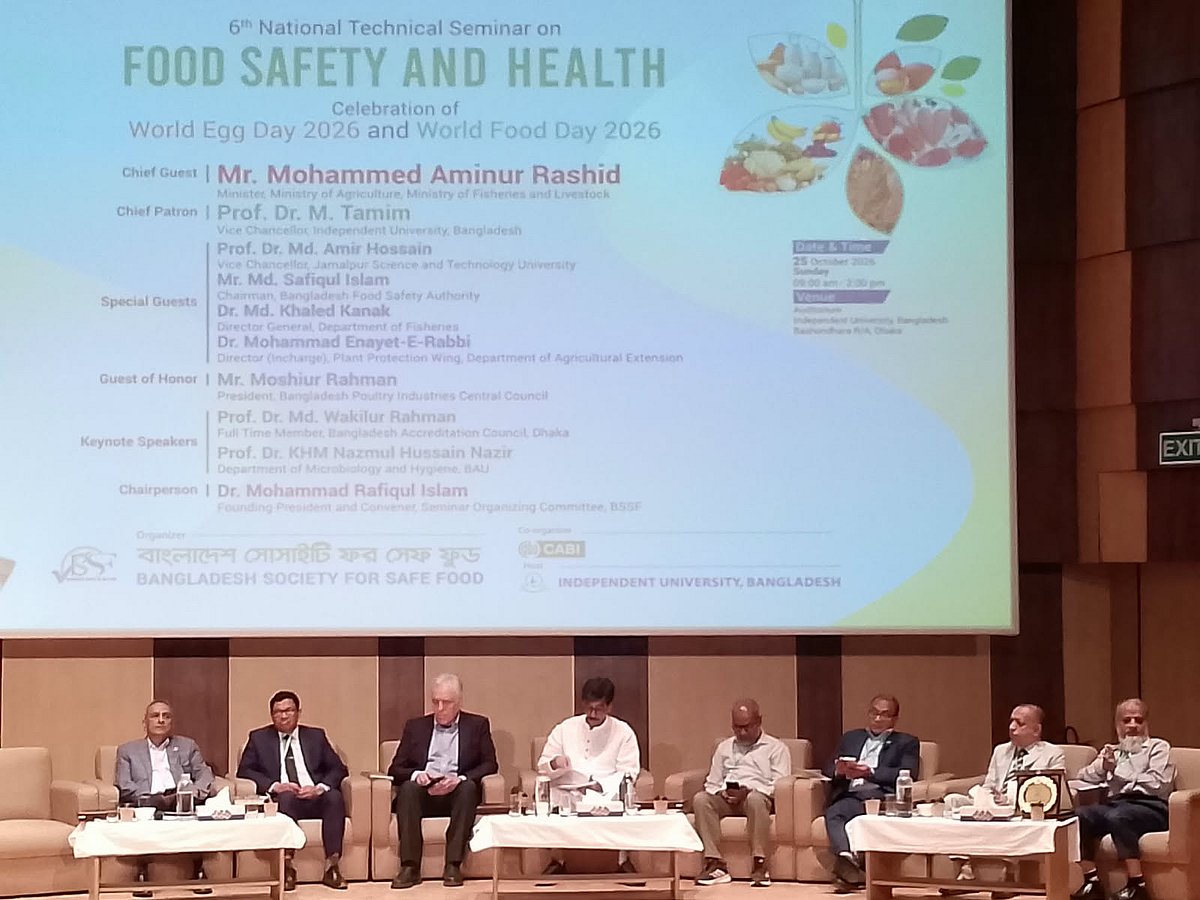
Food adulteration, chemical residues, and a persistent lack of regulatory oversight have emerged as critical threats to public health in Bangladesh. Experts, policymakers, and researchers at a prominent national technical seminar emphasized the urgent need for stringent enforcement of food safety laws, enhanced inter-agency coordination, and rigorous monitoring across the entire supply chain from farm to table to mitigate these multifaceted risks.
The sixth national technical seminar, organized by the Bangladesh Society for Safe Food (BSSF) to mark World Egg Day and World Food Day, centered around the theme 'Food Safety Governance: Leading Among Policy, Science, and Practical Application for a Safe Future.' Held at Independent University, Bangladesh, the event featured comprehensive discussions on safe food production, public health protection, scientific research, institutional synergy, and the export potential of agricultural products. The seminar was chaired by BSSF Founding President Mohammad Rafiqul Islam, with Agriculture, Fisheries, and Livestock Minister Mohammad Amin Ur Rashid attending as the chief guest.

Presenting the keynote paper titled 'Agriculture and Safe Food: The Common Foundation of Public Health Protection and Sustainable Development,' Professor Dr. Md. Wakilur Rahman of the Bangladesh Accreditation Council highlighted alarming global and domestic health data. Citing World Health Organization statistics, he noted that approximately 866 million people fall ill globally each year due to unsafe food consumption—roughly one in every nine people—resulting in nearly 1.52 million deaths. In the context of Bangladesh, the situation is particularly critical, with non-communicable diseases accounting for nearly 70 percent of total deaths, largely driven by the habitual consumption of adulterated and chemically treated food.
Speakers and researchers pointed out that the lack of rigorous monitoring across production, storage, and retail stages has put public health in serious jeopardy. The presence of banned pesticides, chemical ripening agents, and heavy metals in everyday food items causes irreversible long-term damage to human organs. Medical experts directly linked the alarming rise of cancer, chronic kidney diseases, diabetes, and cardiovascular disorders to the unchecked ingestion of toxic substances found in adulterated food supplies.
Concluding the seminar, participants put forward several strategic recommendations to safeguard public health. These include the uncompromising enforcement of food safety regulations, strengthening mobile court operations against dishonest traders, and establishing modern testing laboratories at the grassroots level. Emphasizing the importance of bridging gaps among regulatory bodies, stakeholders urged the development of a unified national food safety strategy to ensure a healthy and secure future for the citizens.