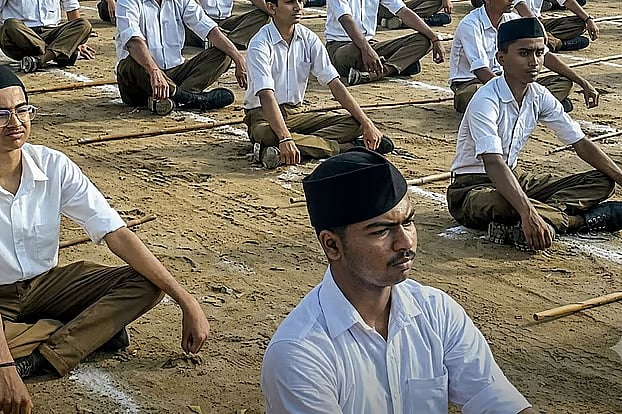
The socio-political landscape of West Bengal is witnessing a rapid and aggressive expansion of the Rashtriya Swayamsevak Sangh (RSS), the ideological parent of the ruling Bharatiya Janata Party (BJP) at the national level. Over the past decade, the RSS has systematically accelerated its outreach and organizational footprint across the eastern Indian state, leveraging political momentum to solidify its grassroots presence.
According to data from the organization, West Bengal had a modest 580 active RSS branches in 2011. However, this number began to climb steadily over the years, reaching approximately 5,000 branches by May 2024. To supercharge this growth, the organization launched a special ten-day outreach campaign from October 1 to October 10, coinciding with Mahalaya ahead of the Durga Puja festival.

Biplab Roy, the RSS publicity head for South Bengal, stated that over 5,000 new branches were successfully established during this ten-day window alone, bringing the total number of active branches across the state to nearly 10,000. Regions that had little to no organizational presence just a few years ago now boast functioning shakhas.
Currently, every district in West Bengal averages around 200 active branches, nearly double the figures from previous years. The organization is heavily prioritizing the longevity and stability of these newly minted branches at the grassroots level, tailoring activities to attract a broader demographic of local youth and volunteers.
Following Lakshmi Puja, the RSS initiated special seven-day training camps designed to integrate new members and make daily activities more engaging. The routine daily programs now incorporate traditional Indian sports such as Kabaddi and stick-fighting, alongside physical exercises like Surya Namaskar, aimed at fostering discipline and community bonding among the participants.