

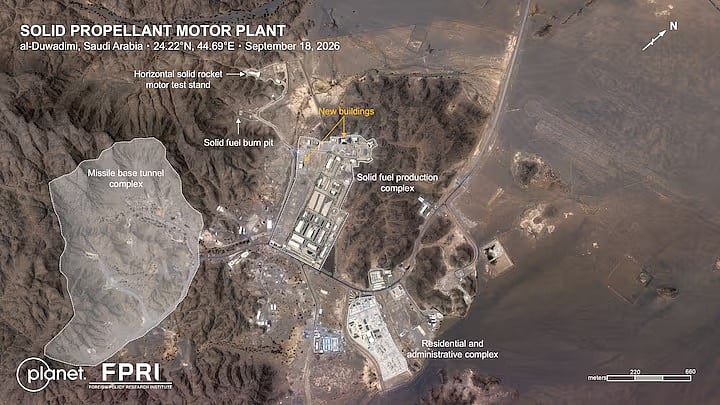
Saudi Arabia appears to be significantly expanding its ballistic missile production capabilities, according to recent analysis of satellite imagery. The expansion at the Al-Dawadimi missile production facility, located approximately 200 kilometers west of Riyadh, suggests that the Kingdom is aiming to develop more powerful missiles capable of carrying heavier payloads and reaching targets at greater distances.
Researchers Sam Lair and Michael Duitsman from the Foreign Policy Research Institute (FPRI) analyzed satellite imagery captured between April 2025 and September 2026. Their findings indicate a substantial upgrade in infrastructure at the site. This strategic move is widely viewed as an effort by Riyadh to bolster its national defense, particularly in response to potential threats from Iran and to strengthen its position in the ongoing conflict involving Houthi rebels in Yemen.

Reducing reliance on foreign military hardware has become a cornerstone of Saudi Arabia's long-term defense strategy. By developing indigenous missile technology, the Kingdom seeks to achieve greater strategic autonomy in a volatile region. However, this pursuit of military self-sufficiency carries significant geopolitical risks. Analysts warn that such developments could trigger a regional arms race, further destabilizing the Middle East.
Furthermore, the expansion has complicated diplomatic efforts between Riyadh and Washington. The proposed civilian nuclear cooperation agreement between the United States and Saudi Arabia is facing renewed scrutiny in the U.S. Congress. Many lawmakers are concerned that Saudi Arabia's growing military ambitions could undermine non-proliferation efforts, casting a shadow over the future of the nuclear deal.
Ultimately, Saudi Arabia's missile program reflects the shifting security dynamics of the Middle East. The Kingdom is balancing the urgent need for a robust national defense against the international community's concerns regarding nuclear proliferation. As regional powers watch these developments closely, the path forward will require delicate diplomatic maneuvering to prevent an escalation of tensions that could reshape the regional security landscape for years to come.


