


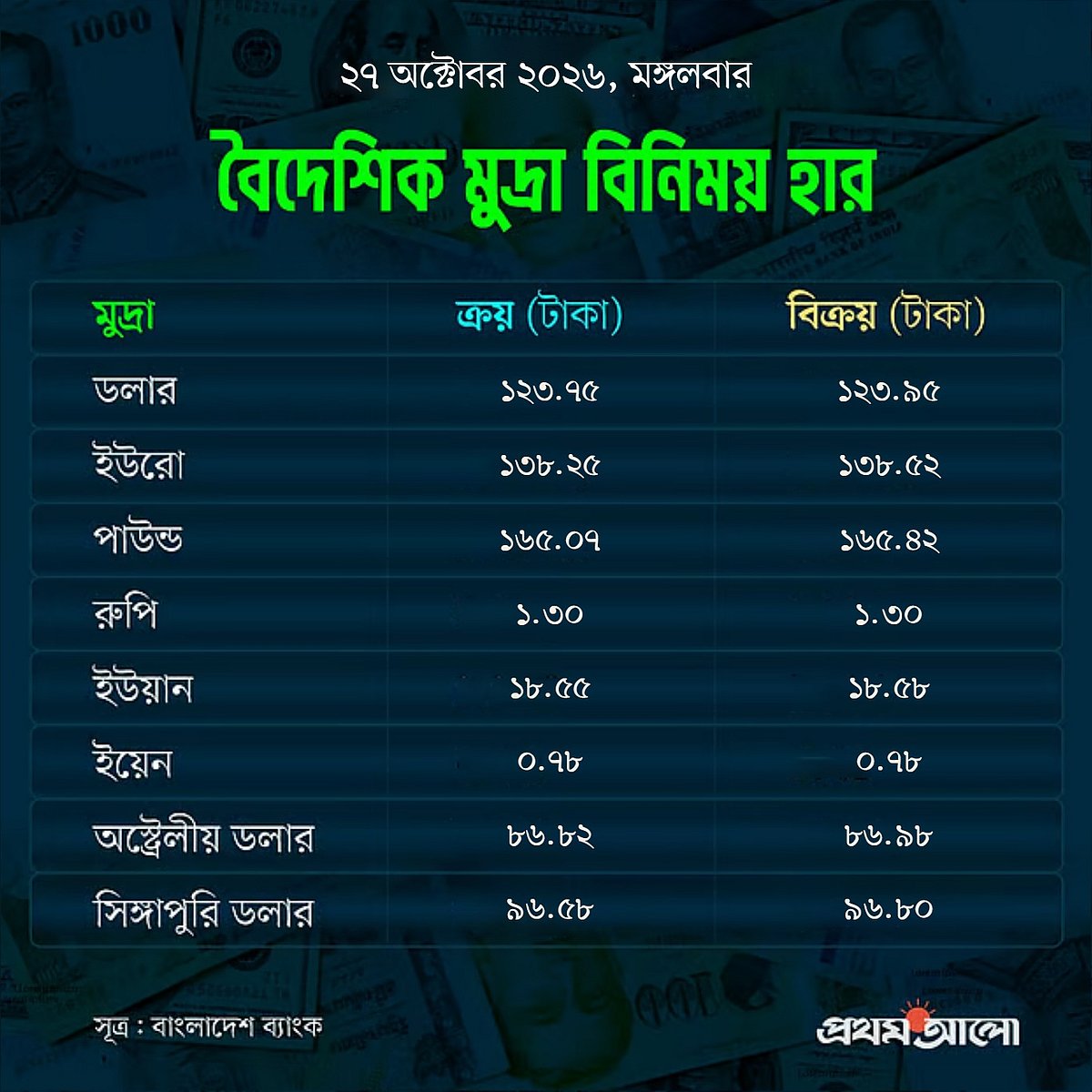
The domestic currency market observed mixed trends on the third working day of the week, reflecting ongoing fluctuations driven by global economic factors and Middle East tensions. According to the latest data published by Bangladesh Bank, the exchange rate for the US dollar has experienced an upward adjustment, with the average market price reaching 123.87 Taka.
Central bank data reveals that alongside the US dollar, only the Chinese yuan recorded an increase in value today. In contrast, the majority of other major foreign currencies saw a decline. This downward trend includes the euro, British pound, Australian dollar, and Singapore dollar. Meanwhile, the exchange rates for the Indian rupee and Japanese yen remained completely unchanged during today's trading sessions.

Market observers note that the rates in open or curb markets typically remain slightly higher than the official rates published by the central bank. These continuous fluctuations directly impact the country's import and export businesses, as well as overall commercial operations. When foreign currency rates rise, the cost of opening letters of credit for importers increases, which ultimately influences the domestic pricing of imported consumer goods and raw materials.
Financial analysts point out that global supply chain disruptions and geopolitical tensions in the Middle East have significantly contributed to the volatility in foreign exchange reserves. While Bangladesh Bank continues to implement various monetary policy measures to stabilize the market, external pressures persist, posing continuous challenges for the national economy.
Business community leaders express concern that persistent instability in currency exchange rates could elevate production costs and fuel inflation. Industrial sectors relying heavily on imported raw materials may face compressed profit margins and reduced competitiveness. Consequently, stakeholders emphasize the need for vigilant market monitoring and strategic interventions.
Ultimately, these currency market dynamics affect financial transactions ranging from retail remittances to large-scale corporate investments. How effectively the central bank and commercial financial institutions manage foreign exchange liquidity will determine the trajectory of market stability and economic growth in the upcoming periods.


