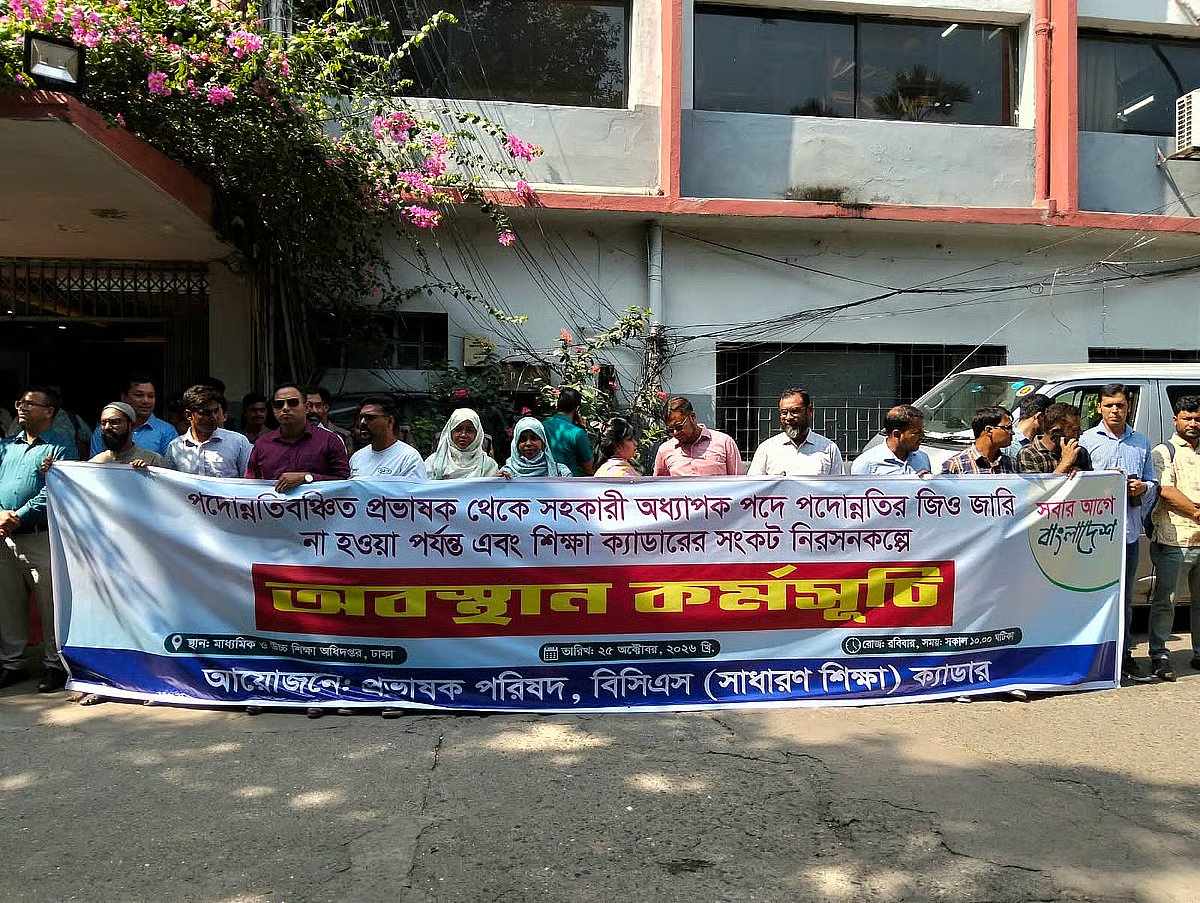
The general education cadre of the Bangladesh Civil Service is facing an unprecedented stagnation in promotions, leaving thousands of dedicated educators trapped in entry-level positions. Officials who joined the education cadre through the 36th BCS examination back in September 2018 have now entered their ninth year of service without receiving a single promotion. While these educators remain frozen at the lecturer rank, their peers in parallel cadres have advanced significantly through regular career milestones, highlighting a deep-seated structural inequality within the civil service framework.
The crisis is not isolated to the 36th batch alone; it reflects a systemic bottleneck that has plagued the education cadre for years. Numerous officials have experienced prolonged delays in career advancement despite successfully acquiring all required professional qualifications, academic credentials, and years of field experience. This continuous deprivation has deeply demoralized the teaching community, leading to mounting frustration, simmering anger, and organized demonstrations demanding immediate bureaucratic reforms and expedited promotions.

Educators and affected officials point out a glaring disparity in career progression opportunities. While officers in administration, police, foreign affairs, taxation, and agriculture enjoy structured and timely promotions, education cadre members are routinely sidelined. This systemic neglect creates a two-tiered civil service environment where those responsible for shaping the nation's intellectual foundation are ironically denied basic professional recognition and upward mobility.
Beyond individual career aspirations, this promotion drought poses a grave threat to the efficiency of education administration and overall workforce management. When qualified and energetic officials are forced to stagnate in the same position for nearly a decade, institutional motivation plummets, directly impacting administrative efficiency and academic supervision across educational institutions nationwide. The psychological toll of career stagnation ultimately trickles down, affecting the quality of educational delivery and institutional planning.
Educational analysts and administrative experts emphasize that resolving this protracted crisis requires urgent political will and structural overhauls. Streamlining the promotion process, eliminating inter-cadre discrimination, and establishing transparent, predictable promotion timelines are essential steps to restore morale. Unless the authorities take decisive, empathetic action to address these legitimate grievances, the growing discontent among education cadre officials could escalate, further disrupting the administrative stability of the country's education sector.