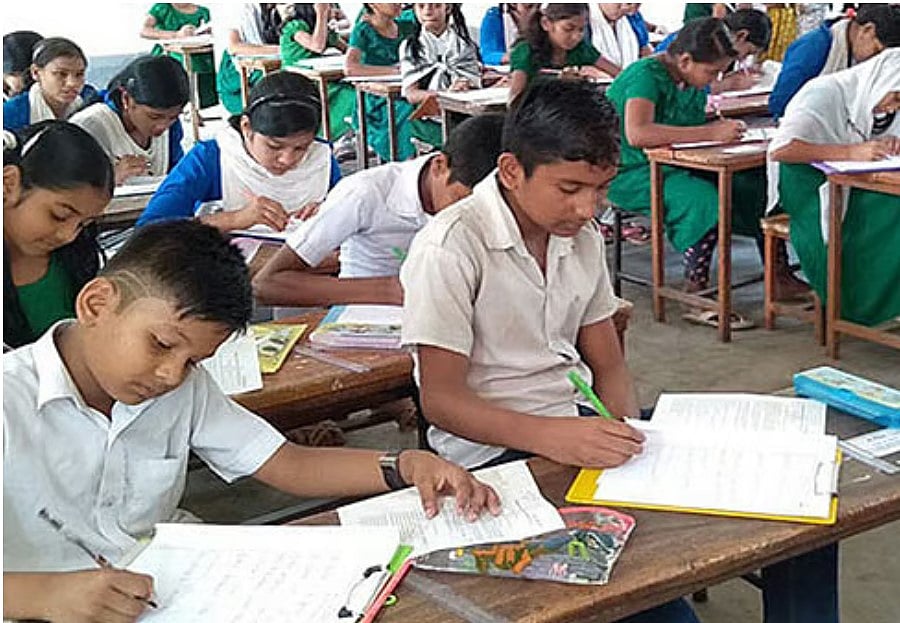
In preparation for the upcoming primary scholarship examination, a comprehensive educational guideline focusing on Bangladesh and Global Studies has been published. Prepared by Rabeya Sultana, a teacher at Biam Laboratory School in Dhaka, this academic resource highlights the glorious history, language movement, and various crucial aspects of the glorious Liberation War of Bangladesh, helping students grasp historical facts accurately.
The published questions encompass significant historical milestones, starting from the historic Language Movement of 1952, the Six-Point Movement of 1966, to the various vital moments of the 1971 Liberation War. Key foundational facts such as the brutal Pakistani military crackdown on the night of March 25, the declaration of independence from the Kalurghat radio station on March 26, and the formation of the first government of Bangladesh on April 10, 1971, have been presented as true-false statements.

Furthermore, the administrative framework of the Mujibnagar Government is detailed in this question set. It outlines the responsibilities of Bangabandhu Sheikh Mujibur Rahman as the President and Tajuddin Ahmad as the Prime Minister of the Mujibnagar Government. It also includes historical milestones such as dividing the country into 11 sectors to conduct the liberation war effectively and the formation of the joint command comprising the allied forces and freedom fighters.
To provide students with a clear understanding of the contributions and state galleries awarded to freedom fighters, the hierarchy of gallantry awards from Bir Sreshtho down to Bir Protik has been clearly defined. Additionally, the role of General M. A. G. Osmani as the Commander-in-Chief during the Liberation War and the heroic contribution of female freedom fighter Taramon Bibi have been affirmed as accurate historical facts.
The background of intellectual killings and the observance of Martyred Intellectuals Day on December 14, alongside the ultimate victory achieved through the surrender of the Pakistani occupation forces on December 16, are also featured. Educationists believe that such practice-oriented questions will play a highly effective role in students' mental development and foster a deep appreciation for national history.
Special emphasis has been placed on historical accuracy alongside the evaluation of scholarship candidates' intellect. Experts express optimism that students participating in the primary scholarship examination will significantly sharpen their preparedness by reviewing and practicing these fundamental questions and verified answers.