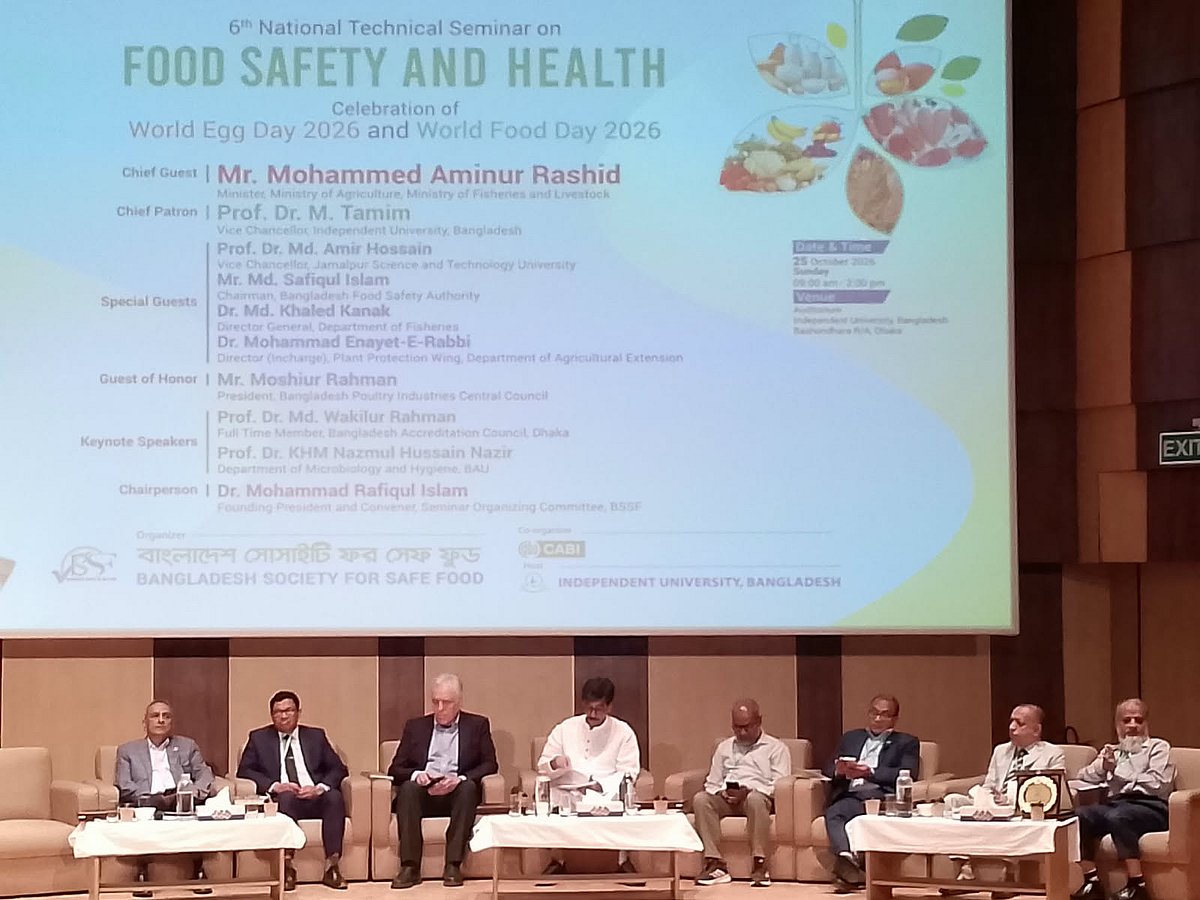
Food adulteration, harmful chemical residues, and a lack of rigorous field-level monitoring have emerged as major concerns for public health in Bangladesh. Experts have strongly emphasized the strict enforcement of existing laws, enhanced coordination among relevant institutions, proper utilization of scientific research findings, and comprehensive food safety assurance throughout the supply chain from production to consumption to mitigate these multifaceted risks.
These critical observations were highlighted during the sixth national technical seminar organized by the Bangladesh Society for Safe Food (BSSF) in Dhaka. Held in observance of World Egg Day and World Food Day, the event brought together prominent researchers, policymakers, and academics. Centered around the theme of good governance in food safety and leadership in policy, science, and practical application, the seminar featured extensive discussions on safe food production, public health protection, institutional coordination, and the immense potential for agricultural exports.

The seminar was chaired by BSSF Founding President Mohammad Rafiqul Islam, with Agriculture, Fisheries, and Livestock Minister Mohammad Amin Ur Rashid attending as the chief guest. In his address, the minister outlined various government initiatives to ensure safe food supplies and stressed the necessity of a coordinated social movement against food fraud. Professor Dr. Md. Wakilur Rahman, a member of the Bangladesh Accreditation Council, presented the keynote paper titled 'Agriculture and Safe Food: The Shared Foundation of Public Health Protection and Sustainable Development.'
Citing World Health Organization data in his keynote, Professor Rahman revealed that approximately 866 million people fall ill globally each year due to the consumption of unsafe food, affecting roughly one in every nine individuals. Furthermore, unsafe food is responsible for approximately 1.52 million deaths worldwide annually. He further pointed out that nearly 70 percent of total deaths in Bangladesh are attributed to various non-communicable diseases, with food adulteration acting as a primary catalyst behind these alarming health crises.
Experts noted that ensuring food safety requires more than just punitive measures; it demands the modernization of agricultural practices, farmer education, and heightened consumer awareness. Strengthening mobile court drives against adulteration and upgrading laboratory testing facilities are deemed essential steps. Policymakers and grassroots stakeholders must act collectively to overcome this long-term public health challenge.
Organizers expressed optimism that the recommendations derived from the seminar will play a vital role in ensuring safe food supplies in the coming days and boosting the global market acceptance of Bangladeshi agricultural and food products. Speakers concluded that the proper implementation of policies and the establishment of science-based food management systems are prerequisites for building a healthy and robust nation.