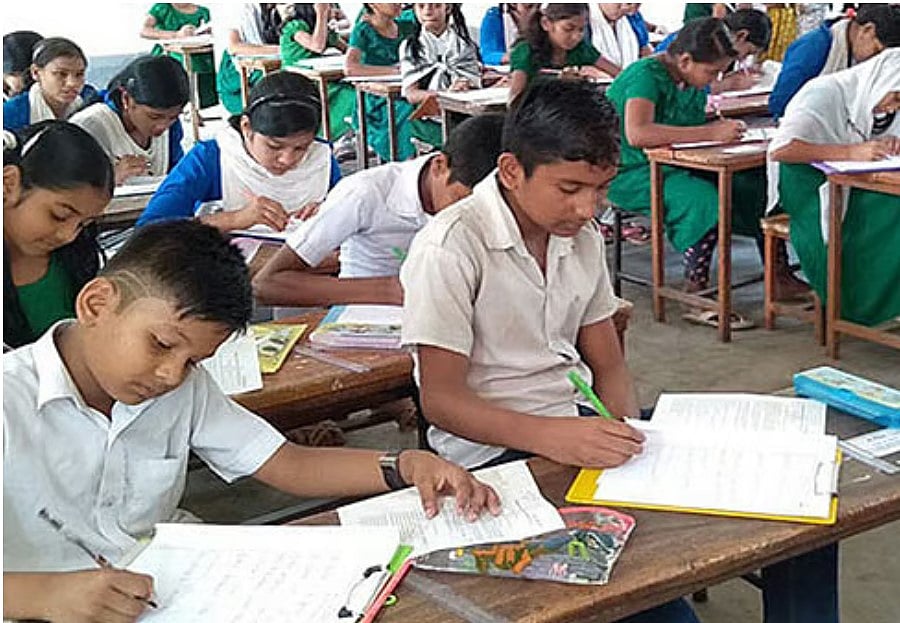
To enhance the preparation of students participating in the primary scholarship examinations, a comprehensive guideline featuring true-false statements and key historical facts on Bangladesh and Global Studies has been published. Prepared by Rabea Sultana, an educator at Viqarunnisa affiliated BIAM Laboratory School in Dhaka, the guide meticulously outlines the pivotal historical milestones of the nation ranging from the 1971 Liberation War back to the 1952 Language Movement.
The released study material aims to solidify foundational knowledge for young learners by validating core historical truths. It covers the brutal crackdown by the Pakistani occupation forces on the night of March 25, 1971, the historic declaration of independence by Major Ziaur Rahman from the Kalurghat radio station on March 26, and the formal formation of the provisional Mujibnagar government on April 10 of the same year.

Furthermore, the instructional guide emphasizes crucial administrative and military aspects of the Liberation War, noting that the country was divided into 11 sectors for effective combat operations, backed by the direct strategic and military support of neighboring India. It also highlights the supreme leadership structure, affirming Bangabandhu Sheikh Mujibur Rahman as the President, Tajuddin Ahmad as the Prime Minister, and General M.A.G. Osmani as the Commander-in-Chief of the armed forces.
To foster a deep sense of patriotism and historical awareness, the guidelines detail the gallantry awards bestowed upon brave freedom fighters, clearly identifying Bir Sreshtho and Bir Protik. It also validates the heroic contributions of female freedom fighters like Taramon Bibi and reinforces the solemn significance of Martyred Intellectuals Day observed annually on December 14.
Educational experts believe that structured and fact-based preparatory materials significantly boost the confidence of primary-level students appearing for competitive scholarship assessments. Such foundational education plays a vital role in preventing historical misconceptions and instilling accurate national heritage in young minds.
Looking ahead, educators advise students to thoroughly comprehend the context behind historical events rather than relying solely on rote memorization, ensuring long-term academic success and a robust understanding of the nation's struggle for independence.